Dienstag, 31. März 2015

Frohe Ostern!


Ein deutscher Osterbaum
Ostern. At this time of year I have a bit of a hankering to get on the next ferry to Germany, as most of my visits to Germany have happened over the Easter holidays. My first trip was to a small town called Duderstadt, near the now-defunct border with the former DDR. I stayed with the Schäfer family who looked after all my needs very well. In their living room they had a small Osterbaum on a windowsill. I was enchanted by the simplicity of the idea and the joy of the design: a bunch of twigs taken from the garden was hung with decorated eggshells. I had been introduced to Germany's enthusiasm for Easter and I was hooked!

Another important feature of Easter in Germany is der Osterhase. According to German folklore this little character originally decided whether children had been naughty or good and carried coloured eggs, sweets or even little toys in a basket as a reward for well-behaved children. 

Germans decorate their houses and gardens with brightly coloured eggs and spring flowers. After a long cold winter everybody is looking forward to the spring, better weather and longer daysAnd not just because of the delicious Easter eggs I was given on Easter morning.

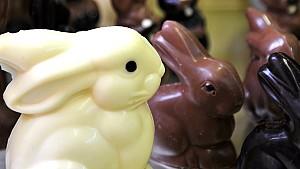
Osterhasen aus Schokolade
If you arrived in Hamburg on the Saturday before Easter Sunday you might be treated to the spectacular sight of bonfires all the way along the banks of the river Elbe as your boat travelled up to Hamburger Hafen. The Osterfeuer is another old German custom to welcome spring. In ancient times it was believed that the light from the fire would bring protection from sickness and misfortune.
Ein Osterfeuer


Donnerstag, 19. Februar 2015

Fasching and Karneval

If you were in Germany, Switzerland or Austria this week you would have seen colourful processions and spectacular masked figures on the streets of many towns and cities. This year's Karneval celebrations were confident and exuberant despite some festivities having to be cancelled because of terror threats.

What is it all about?

The carnival season officially begins on November 11th at 11.11 am, but most of the merrymaking happens during the week before Lent. In some places the beginning of Karneval is January 7th which marks the end of the Christmas period.

There have been jamborees at the end of winter in Germany for many thousands of years. In pre-Christian times people would dress up in masks to drive away the winter spirits and later, Catholics would spend time having fun before the serious business of fasting through Lent began on Ash Wednesday.

Today the celebrations are more secular (that is they are not directly connected to the Church) but they are enjoyed by millions of people throughout the German speaking countries.

The most well known procession takes place in Köln (Cologne) on Rosenmontag, which is the day before Shrove Tuesday. The parade attracts thousands of visitors who come to savour the carnival atmosphere and see the hundreds of costumes and masks on display. The Monday, Tuesday and Wednesday of the week when Lent begins are not legal holidays in Germany, but many businesses close for these three days.

This year there were many different costumes in the Köln parades, some traditional and other eyebrow-raising ones which raise difficult political themes like the shootings in Paris earlier this year.

These pictures come from the Deutsche Welle website and show some of this year's pageants.


Mittwoch, 26. November 2014

Berlin by Night


Das ist der Berliner Dom bei Nacht.


It was lit up with colourful lights for the annual autumn Festival of Lights.

Freitag, 21. November 2014

Quizbusters

In Class 5 this week we played a Blockbusters game to practise adjectives we are working on in German. You can play at home if you like. Just click on the answer button to see if you are right.

Click here to play

Learn German with Felix and Franzi

Felix the Frog and Franzi the duck are two lovable characters who bring German to life for young British learners of the language. Check out their antics on this clip:


Samstag, 15. November 2014

Europa-Park

If you've already ridden the white knuckle rides at Alton Towers or sampled the thrills and spills on offer at Eurodisney then you might be ready to pay a visit to Europa-Park, Germany's biggest theme park.

The park is located In the beautiful Black Forest (Schwarzwald) between the cities of Freiburg and Strasbourg, not too far from the border with France.

The park has roller coasters galore to choose from, including Europe's first wooden roller coaster. For younger children there is Hansel and Gretel's Lebkuchenhaus, with a strong Germanic flavour. Fans of fairy tales can go to the Grimm Library to see the magic mirror and talking furniture and even take part in an interactive story along with other visitors.

To find out more about the park you can visit their website.

Here is a taste of the amazing attractions the park has to offer:


Dienstag, 11. November 2014

The Smart Choice - German at Primary Schools in the UK

This 10 minute clip from the Goethe Institute helps explain why it is so important to learn German.


Montag, 3. November 2014

Wort der Woche: Feuerwerk


In Great Britain many children are getting ready for Bonfire Night, November 5th. On this night you will see and hear the bright colours and loud explosive noises of hundreds of Feuerwerke in the evening skies.


German people tend to buy Feuerwerke at the end of December to mark their New Year's Eve festivities. In fact in a year they set off over 30,000 tonnes of fireworks.


Feuerwerke is pronounced Foy-uh- verker.


These are some of the fireworks which are popular at German parties.


Raketen


Chinaböller


und Sternspritzer


Sonntag, 2. November 2014

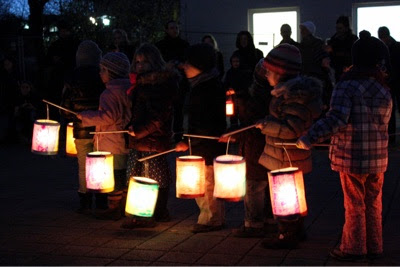
St Martins Laternen

The lanterns carried in processions on St Martin's Day are colourful and bright and no two are the same. Here are a few examples:


St Martin's Day

November 11th is widely celebrated in Germany because it is the day when St Martin is remembered and revered.

St Martin was a knight in Roman times and one cold winter's day he was out riding on his horse. He saw a beggar at the roadside and took pity on him. The story goes that St Martin used his sword to cut his cloak in two and he gifted one half of the cloak to the shivering soul at the side of the road.


In some parts of Germany St Martin's Day is schulfrei, in other words there is no school. For German children St Martin's Day is a day to look forward to. When it gets dark, children wrap up warm and join their friends and other children in lantern processions. Many children have prepared home made lanterns which they take with them. They sing special songs and eat sweet bread rolls shaped like little men, called Weckmann. Sometimes there is a bonfire or children may go from door to door and they might be given small treats like cakes or sweets.

St Martin's Day lanterns are usually made of paper and lit by candlelight.


Mittwoch, 29. Januar 2014

Skifahren in Deutschland

Germany's mountains may be smaller than those in neighbouring Austria and Switzerland, but Bavarian ski resorts provide excellent skiing and hospitality.


Many German children live in or near Alpine ski resorts and cold, snowy winters mean that they can spend winter holidays perfecting the art of skiing. 

Can you guess the meanings of these German words? 

Skiort
Skilift
Skijacke
Skistiefel

A Skiort is a place where you can go skiing. It is usually a mountain village next to a series of snow covered slopes with a network of lifts connecting the slopes. You will usually find busy mountain cafés selling tasty hot snacks and warming drinks, and shops offering a range of ski equipment and clothes. One of the most famous German ski resorts is Garmisch-Partenkirchen in Bavaria.


If you want to get to the top of a ski slope, carrying a pair of heavy skis, the best way to get there is on a Skilift. There are cable cars, chair lifts, poma lifts and gondolas. A poma is a special disc which you put between your legs and sit on while it pulls you up the mountainside. Excellent fun!


No self-respecting skier would venture down a ski slope without a decent Skijacke and a sturdy pair of Skistiefel. Although the Skistiefel are difficult to walk in, they are comfortable and protective when skiing and probably prevent many broken bones. A Skijacke is warm and waterproof and will keep your top half dry when you fall over into a pile of snow. Which everyone does.


Germans are enthusiastic skiers and love the party atmosphere you get at lively ski resorts. They are welcoming and friendly places where you can relax in good company and spend time outside, getting plenty of fresh air and exercise. If you ever get the chance, have a go!


Dienstag, 3. Dezember 2013

Der Nikolaus

Find out more about the generous 2nd century Turkish bishop who became a saint and whose name day is widely celebrated in many European countries.


O Nikolaus


This is a simple song in German about St Nicolas who comes to visit good children in Germany, Austria and many other European countries on the night before der Nikolaustag (December 6th). He leaves sweet treats and small gifts in their boots if they leave them out for him. Naughty children are visited by Krampus who leaves coal and twigs in their boots.

Wort der Woche: Apfel


This ancient fruit is known the world over. Der Apfel ist rund, saftig und süß; round, juicy and sweet.


Used throughout Germany this humble fruit provides refreshing juice (Apfelsaft) and glasses of foaming cider (Apfelmost) and is an important ingredient in many cakes and puddings. One of the most famousof these is Apfelstrudel which is so well known it goes by its German name in many non German-speaking countries.
 © Österreich Werbung, Wolfgang Schardt
 

Apfelstrudel is a Viennese pastry, with a juicy filling made of apples spiced with cinnamon and flavoured with sharp lemon juice and sweet rum. The whole cake is dusted with icing sugar and usually served witha good Austrian coffee. To find out how to make this delicious teatime treat, click here.

Can you work out what this proverb means?
Einen Apfel pro Tag, mit dem Doktor keine Plag.

I think you might have guessed this one. The english version is: An apple a day keeps the doctor away.

Sonntag, 17. November 2013

Wort der Woche: Silber


Silber is the colour of the medal for the second best competitor in a sporting event. It is the precious metal used to make Schmuck ( rings, necklaces, bracelets, earrings, brooches). A Silberschmied uses traditional techniques to make items from Silber.


An German proverb claims that Reden ist Silber, Schweigen ist Gold. Although speaking (Reden) is deemed valuable enough for silver, it comes second place to silence (Schweigen). And a married couple who reach the dizzy heights of 25 years of marriage may celebrate their silberne Hochzeit.

Silberweiß could be used to describe moonlight, and the white willow is known in German as die Silber-Weide.


Donnerstag, 7. November 2013

Mein Kopf ist rund

I wrote this short rhyme a few years ago as a performance poem. Younger children can recite it in groups or pairs or individually. It works nicely in a class assembly and the rhyming words make it easier for children to memorise.


Montag, 4. November 2013

Wort der Woche: Mohn


 Vivid red, cheeky scarlet and faded pink, you can see these iconic flowers everywhere in the UK during the first few days of November. Yesterday I saw a huge one in the departures area for rail  passengers to look at while waiting for their trains at London's King's Cross Station. They are worn to remember and honour soldiers who died in WWI and WWII.  The British public have supported the Poppy Appeal since 1918 and money raised is used to help soldiers who have returned from war to adapt to civilian life.


In Germany and Austria poppies have a more everyday use. Many people might eat them with their breakfast or for a mid-morning treat. Poppyseeds or Mohnkörner are used to decorate bread rolls. They look delicious, especially on the small white Mohnbrötchen available to buy in bakers and coffee shops in most towns and villages. The tiny blue-grey seeds look pretty and add crunch and a nutty flavour to the white rolls. They are also sold in butchers shops; just ask for a Käsebrötchen or a Schinkenbrötchen and you will soon be tucking into a roll freshly filled with cheese or ham.


Donnerstag, 24. Oktober 2013

Allerheiligen

Towards the end of October some lucky schoolchildren in Germany are getting ready for some time off school. While children in the UK are enjoying their half term holidays and making plans for Halloween and Bonfire Night, across the North Sea in Germany most children are working hard in school.

But for children in mainly catholic regions of Germany there is an extra day off school on November 1st. This day is called Allerheiligen which means All Holies. It falls on the same day as All Saints' Day in the UK, Toussaint in France and Día de todos los santos in Spain.

The day is a special religious holiday when all the saints are remembered and honoured. Many Catholics attend church on this day and light special candles and say prayers for family members who have died. It is also a day when people like to visit the graves of relatives and friends who have died. They bring flowers and candles to the graveyards and light candles when it starts to get dark in the late afternoon. It is quite a magical sight to see flickering candles in their thousands in city cemeteries.


Samstag, 5. Januar 2013

A wet start to the year


Nass ins Neujahr

Click on the link above to hear a very short report about Germans (and others) whose idea of a great start to the year is to take a dip in icy waters. Berliners are disappointed in mild weather as they do not get the chance to hack a hole in the ice before taking the plunge. This traditional dip happens in other countries as well, including the UK.

Some bold Germans braving sub-zero temperatures as they enter the waters of Orankesee in Berlin .

Participants take a quick dip in the frozen Orankesee lake at the 26th annual Berlin Seals winter swim on January 9, 2010 in Berlin, Germany. Approximately a dozen ice swimming clubs joined the annual event as a chilly snowstorm swept across Germany.

Freitag, 4. Januar 2013

Frohes Neues Jahr 2013


Frohes Neues Jahr 2013. Ich wünsche euch viel Glück und Zufriedenheit im kommenden Jahr.

There are plenty of New Year's Eve traditions that take place in Germany and Austria. Feuerwerke are typically used to welcome in the new year and drive away bad spirits.

At the stroke of midnight on Silvesterabend  people clink glasses filled with Sekt and wish each other Prosit Neujahr!

When they wake up on New Year's Day (Neujahrstag) many people make a Neujahrsvorsatz. This might be a promise to live more healthily or to be friendlier to others.