The aim of kidzdeutsch is to provide a collection of activities and information to support younger children in their learning of German.
Posts mit dem Label holidays werden angezeigt. Alle Posts anzeigen
Sonntag, 2. November 2014
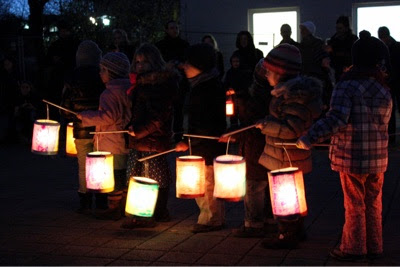
St Martins Laternen
The lanterns carried in processions on St Martin's Day are colourful and bright and no two are the same. Here are a few examples:
St Martin's Day
November 11th is widely celebrated in Germany because it is the day when St Martin is remembered and revered.
St Martin was a knight in Roman times and one cold winter's day he was out riding on his horse. He saw a beggar at the roadside and took pity on him. The story goes that St Martin used his sword to cut his cloak in two and he gifted one half of the cloak to the shivering soul at the side of the road.
In some parts of Germany St Martin's Day is schulfrei, in other words there is no school. For German children St Martin's Day is a day to look forward to. When it gets dark, children wrap up warm and join their friends and other children in lantern processions. Many children have prepared home made lanterns which they take with them. They sing special songs and eat sweet bread rolls shaped like little men, called Weckmann. Sometimes there is a bonfire or children may go from door to door and they might be given small treats like cakes or sweets.
St Martin's Day lanterns are usually made of paper and lit by candlelight.
Donnerstag, 24. Oktober 2013
Allerheiligen
Towards the end of October some lucky schoolchildren in Germany are getting ready for some time off school. While children in the UK are enjoying their half term holidays and making plans for Halloween and Bonfire Night, across the North Sea in Germany most children are working hard in school.
But for children in mainly catholic regions of Germany there is an extra day off school on November 1st. This day is called Allerheiligen which means All Holies. It falls on the same day as All Saints' Day in the UK, Toussaint in France and Día de todos los santos in Spain.
The day is a special religious holiday when all the saints are remembered and honoured. Many Catholics attend church on this day and light special candles and say prayers for family members who have died. It is also a day when people like to visit the graves of relatives and friends who have died. They bring flowers and candles to the graveyards and light candles when it starts to get dark in the late afternoon. It is quite a magical sight to see flickering candles in their thousands in city cemeteries.
Samstag, 30. Juni 2012
Abonnieren
Posts (Atom)


